
Whoa!
Solana moves fast and sometimes it feels like the blockchain’s sprinting.
If you care about NFTs and SOL transactions, an explorer becomes critical.
Initially I thought an explorer was just a lookup tool, but then I realized it’s the forensic lens, the dashboard and the social feed all rolled into one, especially when tracking mint waves and rug pulls.
Here’s a practical guide to using Solscan effectively today.
Hmm…
At a glance Solscan looks clean and really fast.
The NFT tracker surfaces mints, transfers and holders clearly.
On the other hand, there’s nuance: contract labeling isn’t perfect, some token metadata is off, and complex transactions like compressed NFTs or batched swaps can confuse simpler views, so you need to cross-check events with logs and raw instructions to be confident.
My instinct said trust but verify, always double-check on-chain logs.
Something felt off about the first mint page.
I dug into the transaction and saw multiple inner instructions.
Those inner instructions explain token creation, royalty setups and fee transfers.
Initially I thought the token was mis-labeled, but then, after following the instruction logs step by step and mapping program ids, it became clear that metadata update events happened off-chain and were later reconciled, which is a pattern seen across several collections.
Actually, wait—let me rephrase that—inspect both logs and raw instructions every time.
Why the NFT tracker matters
Whoa!
The NFT tracker on explorers like Solscan highlights holders and floor swaps.
You can filter by date, wallet and token program.
When a floor sweep happens it’s useful to trace the buyer wallet’s prior activity, check token provenance, and see whether the swap came from a marketplace smart contract or a direct transfer, and sometimes wallets are bots with scripted patterns that only show when you look at the instruction stack.
This part bugs me, because not every explorer exposes the exact instruction parsing—somethin’ I find annoying.
Seriously?
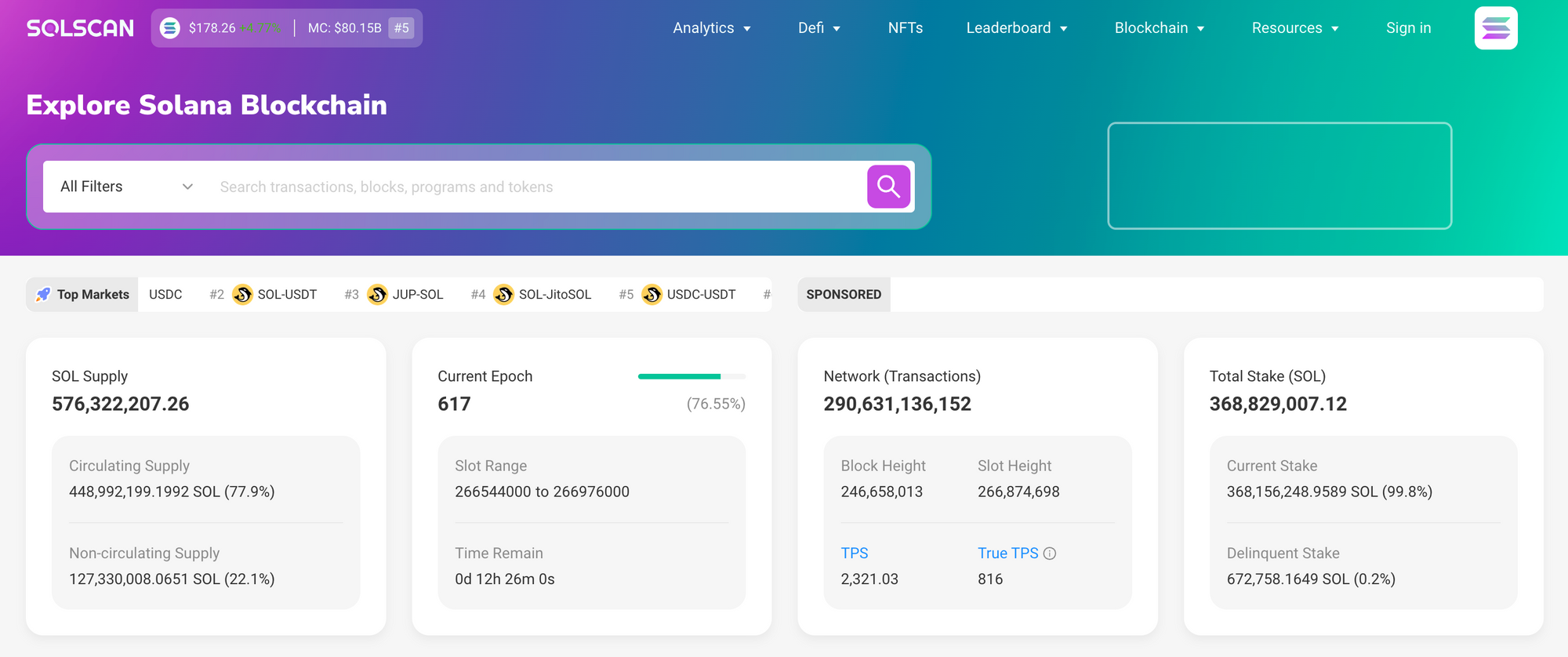
If you want the cleanest single-page views, go to the solscan explorer official site.
It loads block, tx, token and NFT info very very fast.
You’ll see decoded instructions, inner-transaction details and program logs, and while it’s not the only explorer out there, its parsing logic and UI make it one of the more reliable quick-audit tools for routine checks and light forensic work.
I’ll be honest—I’m biased toward tools that show raw instruction data.
Wow!
SOL transactions can be deceptively simple-looking at a glance.
A transfer row often hides multiple token program interactions, memo notes and CPI calls.
When you’re troubleshooting failed transfers or unexpected balance changes, follow the lamports movement, inspect token account creations, then map program ids to known contracts like Serum, Metaplex, or a marketplace program to know whether an action was a market fill or an on-chain accounting change.
My instinct said verify fee payers and pre/post balances every time.
Hmm…
Compressed NFTs add another layer of complexity to tracking.
They store data in specialized accounts and often rely on separate indexing services.
So, when a marketplace claims a mint or transfer happened but the token doesn’t appear in the explorer’s standard token list, dig into account roots, verify merkle proofs if provided, and consult any off-chain indexer logs or event feeds because the canonical on-chain state can be distributed across non-obvious accounts.
I’m not 100% sure how every wallet shows compressed assets.
Whoa!
Tracing wallets is part detective work, part pattern recognition.
Look for wallet age, interaction with known bridges, and repeated transfers to smart contracts.
On one hand, a wallet moving many tokens could be a whale or a diversified collector, though actually if those moves align with a marketplace bot pattern—timing, dusting, and exact price points—you might be looking at an automated sniping operation and not a human buyer.
Something to remember: always check both incoming and outgoing flows.
Okay.
Use the transaction hash to anchor your investigation quickly.
Export CSVs when you need bulk analysis and pattern matching.
If you script audits, call the explorer API or run an archive node query so you can reproduce state snapshots and compare pre/post balances across many wallets, because UI views sometimes cache or omit ephemeral inner instruction artifacts that are present in raw logs.
Pro tip: bookmark program ids you audit frequently and map them to human-friendly labels.
Seriously.
I’ve walked through dozens of transaction mysteries in my head while writing this.
Some patterns are obvious, others hide behind compressed storage or strange program logic.
My advice is simple: use Solscan as your primary quick-check, dig into raw logs when things look odd, cross-reference with other explorers if you need a second opinion, and build small scripts to automate repetitive checks so you don’t miss subtle instruction chaining over hundreds of transactions that might hint at bot activity or accounting quirks.
Hmm… I’m not 100% done with this topic, but it’s a solid start.
FAQ
Can Solscan show inner instructions for every transaction?
Usually yes; Solscan decodes many inner instructions and program logs, but some exotic programs or compressed-asset flows may require manual inspection or alternate indexing services to fully interpret.
What’s the best way to verify a suspicious NFT transfer?
Start with the tx hash, inspect inner instructions and program ids, check the token account history, and correlate timestamps with marketplace events; if things still look odd, export the raw logs or use an API call to re-query archived state snapshots.
